In a previous discussion post on the "AI Agent Security Enforcement Gap," we explored how policy drift and the divergence between intended controls and actual enforcement create strategic liabilities. While we established that an application-centric Zero Trust approach is the cure for "firewall museums," a new, more pervasive challenge has recently entered the enterprise: Shadow AI.
As organizations race to adopt Generative AI (GenAI), the gap between sanctioned innovation and unauthorized usage is widening. Most security leaders are currently relying on legacy Secure Web Gateways (SWG) or Cloud Access Security Brokers (CASB) to manage this risk. However, these tools were built for the SaaS era, not the Agentic AI era.To truly secure the modern enterprise, security leaders must evolve their strategy into a comprehensive Shadow AI security platform. This requires mapping the detection, monitoring, and governance directly to an organization’s Zero Trust outcomes.
The Shadow AI Landscape: Beyond Simple URL Filtering
Shadow AI isn't just an employee asking ChatGPT to write an email; it is the integration of unauthorized AI plug-ins, the leakage of proprietary code into public LLMs, and the rise of autonomous agents that bypass traditional perimeter checks.
|
Capability |
Legacy Network Centric Approach (Netskope, Zscaler, PaloAlto, etc) | Zero Trust Shadow AI Platform |
| Detection | URL/Domain-based blocking. | Identity-aware application fingerprinting and API discovery. |
| Monitoring | Traffic volume and basic DLP patterns. | Contextual prompt monitoring and token-level inspection. |
| Governance | Static "Allow/Deny" lists. | Dynamic, intent-based policies and automated remediation. |
| Compliance | Periodic reporting based on logs. | Real-time mapping to NIST, SOC2, and ISO AI standards. |
Unauthorized AI Use Detection: Moving to Application-Centric Visibility
Traditional players like SASE and Network Centric Clients (as noted above) focus heavily on the network layer (regardless if from a central point or distributed user clients). They see that a user is visiting a known AI site, but they often lack the granular visibility into how that application is interacting with internal data.
A mature Shadow AI security platform treats AI as a unique application class. By focusing on application-centric visibility, security leaders can identify not just the use of "ChatGPT," but the use of localized, open-source models or browser extensions that may be siphoning data from internal CRM and ERP systems. This visibility is the first step in eliminating the "enforcement gap" we previously identified.
Monitoring Generative AI Usage: Protecting the "Prompt"
The risk of GenAI isn't just where the data goes, but what the data is. Monitoring GenAI usage requires a deep understanding of the prompt-response cycle.
Unlike traditional DLP (Data Loss Prevention) which looks for Social Security numbers or credit card patterns, Shadow AI monitoring must look for "Logic Leakage" - the submission of proprietary source code, internal product roadmaps, or legal strategies into public training sets. By implementing continuous verification at the application layer, organizations can intercept high-risk prompts before they leave the environment, ensuring that the "agentic" nature of these tools doesn't lead to accidental data exposure.
AI Governance and Compliance: Mapping to Outcomes
For the CISO, the goal isn't just "security" - it’s "compliance." Governance controls must map directly to Zero Trust outcomes:
-
Least Privilege Access: Ensure that only sanctioned AI agents have access to specific data repositories.
-
Continuous Authorization: Move beyond the login. Just because a user is authorized to use an AI tool doesn't mean they are authorized to feed it sensitive financial data.
-
Policy Alignment: Automatically align AI usage policies with existing regulatory frameworks (like the EU AI Act or local privacy laws) to prevent the policy drift that plagues traditional security stacks.
Enterprise AI Risk Management: Differentiating the Approach
When evaluating better solutions for AI security, the differentiator lies in how things can be sandboxed (formally might have been known as microsegmentation but AI sandboxing is so much more than any segmentation). And in that, AI security needs to grow into application focused sandbox visibility and control.
Firewalls vendors (tradition and even next-gen) as well as SASE (Secure Access Service Edge) network solution providers have approached AI security as an add-on to their existing product or SASE stacks. This often results in a "bolted-on" feel where policies are managed in silos. A dedicated Shadow AI security platform must at least contain this ability to enable sandboxing (formally microsegmentation) at its core. This creates a "blast cell" around AI interactions. If an unauthorized AI agent is detected or if a sanctioned tool begins behaving erratically (policy drift), the platform can autonomously isolate that specific application flow without disrupting the entire network.
Shadow IT and AI Controls: The Future is Autonomous
As we discussed last month in my previous article, manual security processes are the primary cause of rule redundancy and vulnerability. The same applies to AI and even more so. If your security team has to manually approve every new AI tool or browser extension, they will inevitably fall behind, leading to more Shadow AI.
The solution is an autonomous governance engine. By using central policies and even AI/ML to secure AI, the platform can categorize new tools, assess their risk posture based on community data and technical signatures, and apply "guardrail" policies automatically. This moves the security team from being "gatekeepers" to "enablers."
Start with Impact: Bridging the Gap
The transition from traditional IT to an AI-driven enterprise is happening faster than any previous technology shift. Relying on "firewall museums" or legacy cloud proxies to secure this transition is a recipe for disaster.
By deploying a Shadow AI security platform built on Zero Trust principles, enterprise security leaders can finally close the enforcement gap. This approach provides the scalable, high-impact capabilities needed to satisfy board-level concerns about AI risk while providing the technical depth to stop modern, agentic threats in their tracks.
Security is no longer about building a bigger wall; it's about creating a smarter, more adaptive fabric that understands the intent and movement of every AI agent in the ecosystem. It's time to move beyond detection and into the era of autonomous, application-centric governance.
Case Study: A $20 Billion Lesson in Traditional Tooling Inadequacy
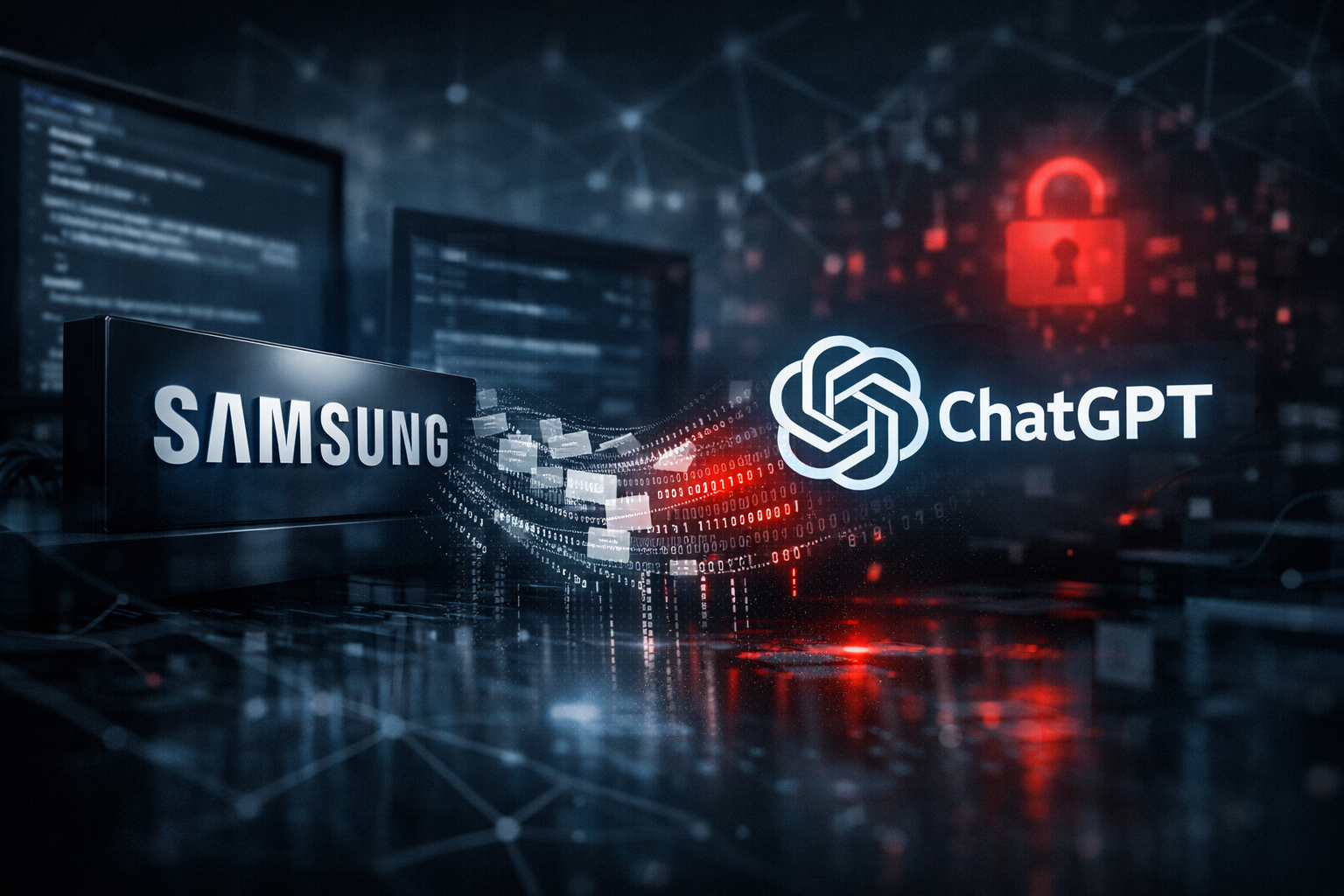
To understand why a dedicated Shadow AI security platform is a mechanical necessity, we need only look at the now-infamous 2023 Samsung ChatGPT Leak. This isn't just a cautionary tale; it is a blueprint of how legacy security stacks - the very ones championed by Palo Alto and Zscaler - leave the front door wide open.
The Anatomy of a Failure: Three Strikes in 20 Days
Samsung engineers, some of the most tech-savvy professionals in the world, were allowed to use ChatGPT to assist with their workflows. Within a mere 20 days, three separate, catastrophic data leaks occurred:
-
The Source Code Leak: An engineer pasted proprietary semiconductor database source code into ChatGPT to debug a faulty program.
-
The Optimization Leak: Another employee uploaded proprietary code used for identifying hardware defects to get optimization suggestions.
-
The Strategy Leak: A third employee converted a smartphone recording of a confidential internal meeting into a transcript and fed it to ChatGPT to generate meeting minutes.
Why Legacy SASE and Firewalls Were Powerless
In all three instances, Samsung likely had robust enterprise security in place. So why did their tools fail?
-
The "Authorized Site" Paradox: To a Secure Web Gateway (SWG), ChatGPT is a legitimate, productive site. The connection was encrypted (HTTPS), the destination was "safe," and the user was authenticated. Traditional tools saw "Productive Web Traffic" when they should have seen "Intellectual Property Exfiltration."
-
The Content Gap: Legacy DLP is tuned for fixed patterns—Social Security numbers, credit card strings, or known file signatures. It is fundamentally incapable of recognizing that a block of C++ code or an unstructured meeting transcript represents the "crown jewels" of a $20 billion semiconductor division.
-
The Intent Blindness: Traditional security cannot distinguish between a helpful prompt and a harmful leak. It lacks the semantic understanding required to know that while the destination is authorized, the content is a trade secret.
The Win Case: A Zero Trust Shadow AI Platform Response
Had a true Shadow AI security platform been in place, the outcome would have looked very different. Instead of a reactive, company-wide ban that stifled innovation, the platform would have provided:
-
Contextual Prompt Inspection: Rather than just seeing traffic to chat.openai.com, the platform would have intercepted the "pasted" content in real-time. Recognizing the "flavor" of semiconductor source code through AI-powered classification, it would have blocked the submission before it reached OpenAI’s servers.
-
Data Protection: By applying Zero Trust principles to the application layer, the platform could have ensured that the tools used to record meetings never had a logical path to external AI processing without a specific, governed clearance.
-
Autonomous Remediation: The moment the first high-risk prompt was detected, the platform could have triggered an automated "Just-in-Time" training notification to the user, explaining the risk and suggesting a sanctioned, private-tenant AI alternative.
The Bottom Line for Security Leaders
The Samsung incident proves that intent doesn't protect you. These employees weren't malicious; they were trying to be efficient. But in the age of non-deterministic threats, efficiency without visibility is just a faster way to have a breach.
Today’s tools are built for a world of static rules. To win in the AI era, you need a platform that understands context, identifies Shadow AI agents in real-time, and enforces governance at the speed of a prompt. Don't wait for your own "Samsung moment" to realize your current stack is looking for yesterday's threats.
The Gap Extends the Enterprise Risk
To effectively bridge the gap between technical reality and executive oversight, we must address why the current "bolted-on" approach to AI security is creating both a structural vulnerability in the network and a fiduciary risk in the boardroom.
Current SASE (Secure Access Service Edge) and SSE (Security Service Edge) architectures - were designed to secure the Cloud Era. They excel at connecting users to known SaaS applications via encrypted tunnels. However, the AI Era introduces a technical challenge these architectures were never meant to solve: the "Semantic Payload."
The Protocol Blind Spot
Traditional architectures operate on a "Pass/Fail" logic at the network or file level. If the certificate is valid and the file doesn't contain a known virus signature, the traffic passes.
-
The Gap: GenAI traffic is almost entirely unstructured text (JSON payloads over HTTPS). To a traditional firewall, a user sending a recipe for "Lemon Cream Pie" looks identical to a user sending a "Proprietary Chip Architecture" schematic.
-
The Shadow AI Platform Advantage: A true Shadow AI platform introduces Deep Intent Inspection. It sits at the application layer, using its own localized AI to "read" the outbound traffic in real-time. It doesn't just check the destination; it checks the semantic meaning of the data against corporate policy before the packet ever hits the public internet.
The "All-or-Nothing" Policy Trap
Most current tools offer "Tenant Restrictions" - allowing a user to log into the corporate ChatGPT but not their personal one.
-
The Gap: This is a binary control. It doesn't stop an authorized user from making an unauthorized mistake. Once the "tunnel" is open, the SASE architecture is essentially blind to the specific context of the prompt.
-
The Shadow AI Platform Advantage: By integrating with Zero Trust, a modern platform can enforce "Zero Trust for AI." It can dynamically restrict the type of questions an agent can get answers based on the user's specific role, seniority, and current project access, rather than just granting a blanket "Allow" to the URL.
AI Governance as a Fiduciary Risk
For the Board of Directors, Shadow AI isn't just a "tech problem" - it's a massive compliance and valuation risk. When enterprise security leaders present to the board, the conversation must shift from "blocking websites" to "protecting the balance sheet."
Regulatory Drift and the "Compliance Gap"
With the emergence of the EU AI Act and evolving SEC disclosure requirements, boards are now legally responsible for knowing where their data is being processed.
-
The Issue: If a company cannot prove it has "reasonable oversight" of unauthorized AI usage, it faces massive fines and potential litigation. Traditional tools provide logs of where people went, but they cannot provide an audit trail of what was discussed.
-
The Requirement: Boards need a verifiable compliance ledger. A Shadow AI security platform provides a real-time dashboard that maps AI usage to specific compliance frameworks (NIST AI RMF, ISO 42001), showing exactly how many "unauthorized AI attempts" were remediated before they became "reportable incidents."
Protecting Intellectual Property (IP) Valuation
The value of a modern enterprise is increasingly tied to its proprietary data and "agentic" workflows.
-
The Issue: If proprietary IP is used to train a public model, that IP may lose its "trade secret" status. In a merger or acquisition, "poisoned" IP can slash a company’s valuation by millions.
-
The Requirement: Security leaders must move from "Security as a Cost Center" to "Security as IP Insurance." A dedicated Shadow AI platform ensures that the company's "Secret Sauce" stays within the organizational boundary, preserving the company's long-term competitive advantage.
A New Standard for AI Governance and DLP
Ultimately, the goal is to transform the "Shadow AI" threat into a "Sanctioned AI" opportunity. By closing the architectural gaps and addressing the compliance needs of the board, organizations can stop being afraid of GenAI and start using it as a force multiplier.
Conclusion: Bridging the Gap Between Innovation and Integrity
The rapid ascent of GenAI has created a paradox: the very tools meant to accelerate business are creating an unprecedented "enforcement gap" that legacy security architectures simply cannot span. As we’ve seen, the technical blind spots of SASE and the fiduciary risks facing the board are not just minor hurdles - they are structural flaws that leave the enterprise exposed.
Relying on "firewall museums" or basic URL filtering to govern AI is like trying to manage a high-frequency trading floor with a ledger and a quill. The speed of the agentic era requires a Shadow AI security platform that operates with the same intelligence and agility as the models it monitors.
To truly Bridge the Gap, security leaders must move beyond the "no" and get to a "safe yes." This means:
-
Bridging the Technical Gap by moving from network-level blocking to semantic, application-centric visibility that understands intent.
-
Bridging the Governance Gap by replacing manual, drifting policies with autonomous controls that map directly to compliance frameworks.
-
Bridging the Executive Gap by transforming security from a reactive technical hurdle into a proactive strategy that protects the company's valuation and intellectual property.
The goal is not to slow down. The goal is to build a foundation so secure that the business can move faster than ever before. By closing the gap between sanctioned innovation and unauthorized usage, we don't just secure the enterprise - we empower it to lead in the AI-driven future.
Ready discuss how a true Zero Trust and Agentic AI aware environment can be your future in a matter of weeks? Zentera is standing by to help you on this journey to make efficiency real today.
Contact Zentera as sales@zentera.net or reach out to your local Zentera partner for more details.
Sources: