

Ransomware succeeds when compromised identities and endpoints can reach what matters most. Zentera adds a Zero Trust enforcement layer in front of critical applications and data. Attackers may land, but they can’t spread, explore, exfiltrate, or encrypt at scale.
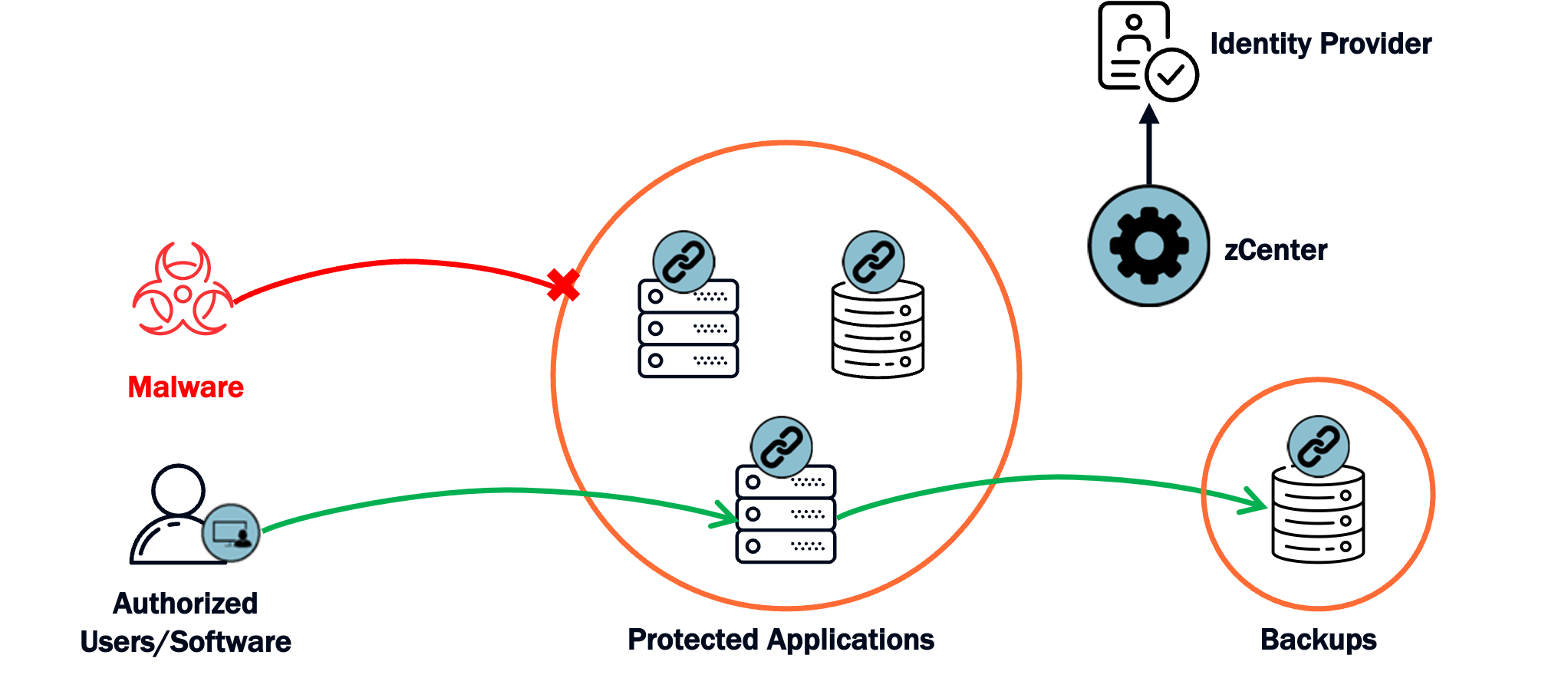
Users, devices, and applications requesting access
Protected applications, servers, and data
Lightweight agents enforce access at the workload
Central policy engine and identity verification
Add a Zero Trust enforcement layer in front of critical apps without redesigning the network - so you can reduce ransomware impact fast.
Stand up the Zentera control plane and onboard the first protected application (start small: 1 app).
Place enforcement where it fits your environment: lightweight endpoint proxy where supportable + inline/agentless enforcement where required; integrate with your IdP and logging pipeline.
Decide what “must not go down” first (your crown jewels) and restrict access to only the people and systems that truly need it.
Select 1–3 high-value targets (e.g., file shares, identity services, ERP/finance, sensitive databases) and define the protection boundary per application.
Create initial least-privilege policies: who/what can access each protected app (users, admin roles, vendors, service-to-service), and set a default-deny posture for everything else.
Validate real access needs before locking things down, so protection improves without breaking workflows.
Make critical apps unreachable by default so ransomware can’t spread, discover targets, or encrypt/exfiltrate at scale.
Treat blocked access attempts as high-signal early indicators of breach, and use reporting to support leadership, insurance, and audit conversations.
Export allow/deny events to SIEM/SOAR and alert on policy violations targeting protected apps (credential misuse, lateral movement attempts).
Operationalize: tune policies as apps change, expand protection app-by-app, and periodically review access posture for “crown jewels.”
Security teams and IT leaders who need ransomware containment across hybrid environments without slow segmentation projects
Hybrid IT (on‑prem + cloud), multi‑site enterprises, M&A integration, third‑party/vendor access, regulated environments
Business‑critical applications and data (ERP/finance, file stores, databases, identity services, source code repositories, operational applications)
Application cloaking, least‑privilege access, rapid application microsegmentation, secure vendor/admin access without broad network trust
Universal ZTNA, Virtual Chambers, Overlay Network, zLink connectors
First critical application protected in days. Risk reduction compounds as more “crown jewels” are added.
Identity providers (SAML 2.0, OAuth/OIDC, LDAP), SIEM/SOAR platforms, asset discovery tools
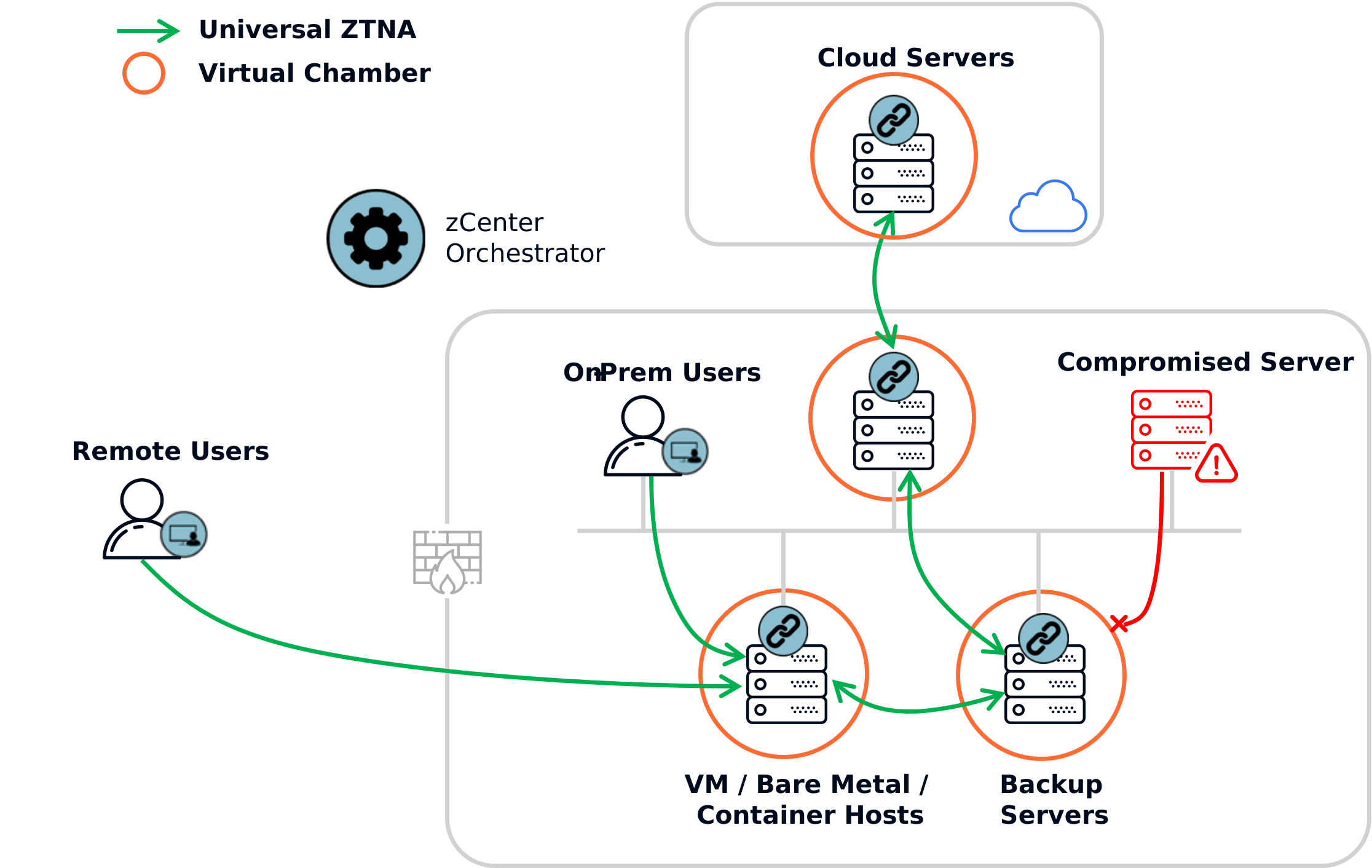
This diagram illustrates how Zentera’s enforcement model protects critical applications and data from ransomware by removing implicit reachability and enforcing identity‑ and policy‑based access to protected systems.
Users authenticate through existing IdP before accessing any protected applications
Critical applications and data are wrapped in policy‑enforced chambers that define allowed connections
Only explicitly authorized users, devices, and applications can establish sessions to protected systems
Lightweight proxies enforce policy where supportable, with agentless/inline options available where required
