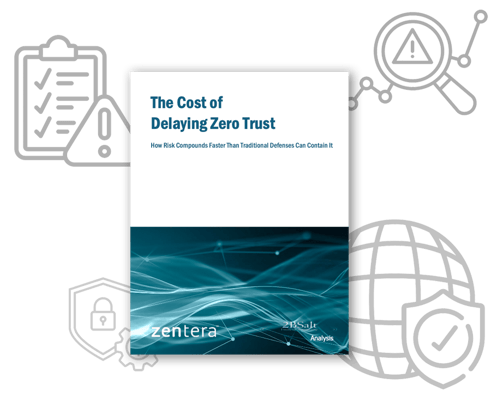
How Risk Compounds Faster Than Traditional Defenses Can Contain It - Analysis
Every week without microsegmentation is a week where your blast radius is your entire network.
The question isn't whether you need Zero Trust. It's what another quarter of delay costs your organization.
Delaying Zero Trust is no longer a neutral decision - it is an accelerating source of cyber risk.
This report exposes how attack paths, identities, unmanaged devices, and third-party connections grow faster than traditional defenses can contain them. Using real breach data and a Monte Carlo analysis of annual loss probabilities, it quantifies how every quarter of delay sharply increases an organization’s financial exposure.
Readers will learn why common excuses consistently fail, why traditional segmentation tools cannot keep pace with modern environments, and how Virtual Chambers enable true Zero Trust in as little as 30 days - without network redesign or operational disruption.
This is the definitive guide for CISOs, OT leaders, and executives seeking to understand the real cost of Zero Trust delay - and how to eliminate it.
Key Insights
Andrew Hamilton, CTO, Cybriant